1. Produce
Panels and an inverter are sized around the property, usage history, roof, electrical design, and utility rules.
North Carolina residential solar + battery
Build a clearer energy plan around the way a North Carolina home or select commercial property uses power. JB’s Home Solutions can help you explore solar panels, inverters, battery backup, generator coordination, and future electrical needs where the responsible provider serves the location. Homeowners in Greensboro, Winston-Salem, High Point, Raleigh, Charlotte, and nearby communities can start with a local service-area review when available.
A simpler way to think about the system
Solar can produce power on your roof. Battery storage can keep selected loads running when the grid is down or rates are higher. For eligible projects, a vendor-owned AI compute node can add a separate hosting opportunity with a written monthly base and program terms. We explain the pieces separately so you can compare the real scope before deciding.
Panels and an inverter are sized around the property, usage history, roof, electrical design, and utility rules.
Battery capacity and critical loads are planned around outage priorities, recharge strategy, and equipment compatibility.
Ask whether your property qualifies for vendor-owned Residential AI Node Hosting, including the 1 Gbps internet requirement, 30-year service term, and vendor-guaranteed monthly base under the hosting agreement.
How it works
Free conversation → property and utility review → custom proposal → installation and provider handoff. Financing, tax treatment, utility credits, warranty coverage, and AI-node terms are reviewed in writing.
Free planning tool
Enter a recent monthly bill or usage figure and receive a preliminary system-size, cost, savings, payback, ROI, and incentive scenario. We’ll email the full JB’s Home Solutions cost-savings report to you and our team.
Use a monthly bill, monthly kWh, or both. Bill-photo upload is not required for this calculator.
Commercial scenarios add an illustrative MACRS-related value line.
All results are preliminary planning estimates—not a quote or guarantee.
Electrical service menu
Tell us what you need repaired, installed, relocated, upgraded, or restored. Final scope, provider, code, permitting, and scheduling are confirmed before work begins.
Continue your planning
Use these planning resources to compare the free scan, electrical capacity, backup power, and local service-area context before requesting a proposal.
Why homeowners start here
How it works
Helpful answers
Yes. A specialist can review solar production, usable battery capacity, critical loads, generator coordination, electrical capacity, and outage priorities together. Battery sizing depends on the property, equipment, utility, load profile, and desired backup duration; final sizing and installation require professional verification.
kW describes how much power equipment can deliver at one time, while usable kWh describes how much stored energy is available over time. A proposal should explain both figures and identify which circuits or loads the system is intended to support.
Some properties may support whole-home backup, while others are better served by selected critical loads such as refrigeration, communications, security, medical equipment, heating or cooling controls, and essential lighting. The responsible provider confirms transfer equipment, panel capacity, code requirements, and the design that fits the property.
Solar-plus-storage can provide quiet battery backup and may recharge from solar when designed for that use; a generator can provide longer-duration fuel-based backup. Some homes may evaluate both. The right comparison depends on outage patterns, fuel access, critical loads, noise, maintenance, electrical capacity, and budget.
JB’s Home Solutions can start a service-area and proposal conversation for Greensboro, Winston-Salem, High Point, Raleigh, Charlotte, and other locations when the responsible provider serves the property. Local utility, permitting, interconnection, licensing, and installation details must be confirmed for the specific address; city pages provide planning context rather than a guarantee of availability.
JB’s Home Solutions can begin a preliminary conversation for select commercial properties and organizations nationwide where the responsible provider serves the location. The review can organize facility type, load profile, roof or ground-mount context, resilience goals, storage, demand considerations, interconnection, incentives, financing, engineering, licensing, and installation questions before a provider prepares a final proposal.
A useful proposal should identify the property and assumptions, estimated system size and production, battery capacity and intended loads, equipment categories, utility and permitting considerations, ownership or financing options where available, warranty and service responsibilities, timing, and the next decision step. Preliminary estimates are not a substitute for site, structural, electrical, utility, or engineering verification.
Numerous financing paths may be available for qualifying customers through nationwide lending partners. Approval, terms, rates, fees, cash-back features, and program availability are determined by the applicable lender and provider, and no financing outcome is guaranteed.
Solar planning can begin with the utility serving the property, including an investor-owned utility, cooperative, or municipal provider. Current tariffs, interconnection rules, export-credit treatment, and available local programs are reviewed for the address; JB’s Home Solutions does not assume one utility’s rules apply everywhere.
With a purchase or solar loan, the homeowner generally owns the system subject to the agreement. In a lease or power-purchase arrangement, a third party may own and maintain the system while the homeowner pays for the lease or the electricity produced. Availability, escalators, maintenance, transfer terms, tax treatment, and savings assumptions vary and must be compared in writing.
Roof condition, structure, age, materials, penetrations, and remaining service life should be reviewed before final design. If replacement is likely, sequencing roofing and solar can reduce the chance of removing and reinstalling panels later. A qualified roofing and solar provider must verify the property.
A retrofit may be possible, but compatibility, inverter architecture, panel capacity, transfer equipment, code, permits, available space, and utility requirements must be checked. The proposal should identify the intended critical loads, usable battery capacity, expected runtime assumptions, and recharge plan.
Usually not for a grid-tied system, because the system must shut down during an outage to protect utility workers. Properly designed storage, islanding controls, and transfer equipment can provide backup for selected loads or, when the property supports it, a broader portion of the home.
North Carolina has multiple residential rate structures, including revised riders with different charges and export-credit treatment. Eligibility can depend on the serving utility and interconnection request, and cooperative or municipal rules may differ. The applicable current tariff is reviewed before a proposal; no single credit rate is promised.
Solar may offset some or much of the electricity a home uses, but fixed customer charges, minimum bills, non-bypassable charges, rate design, weather, usage changes, and export-credit rules can leave a balance. Any bill-reduction estimate is property-specific and not guaranteed.
A property address, recent utility bill or kWh history, roof age and concerns, current electrical equipment, outage priorities, desired backup loads, project timing, and financing preferences help organize the review. The free scan is preliminary and does not replace structural, electrical, utility, or engineering verification.
Share the property address, the main concern, project timing, and any photos, utility information, equipment details, or questions that would help a specialist understand the request.
Often, yes. JB’s Home Solutions can help connect related goals such as roofing, solar + battery backup, generators, electrical, HVAC, insulation, security, and practical home services when the project benefits from a coordinated plan.
Solar product specifications
Review the active module specification sheets supplied for JB’s solar planning conversations. Final module selection depends on roof layout, electrical design, availability, provider requirements, warranty terms, and the property-specific proposal. The inactive new-sales folder is intentionally not listed.
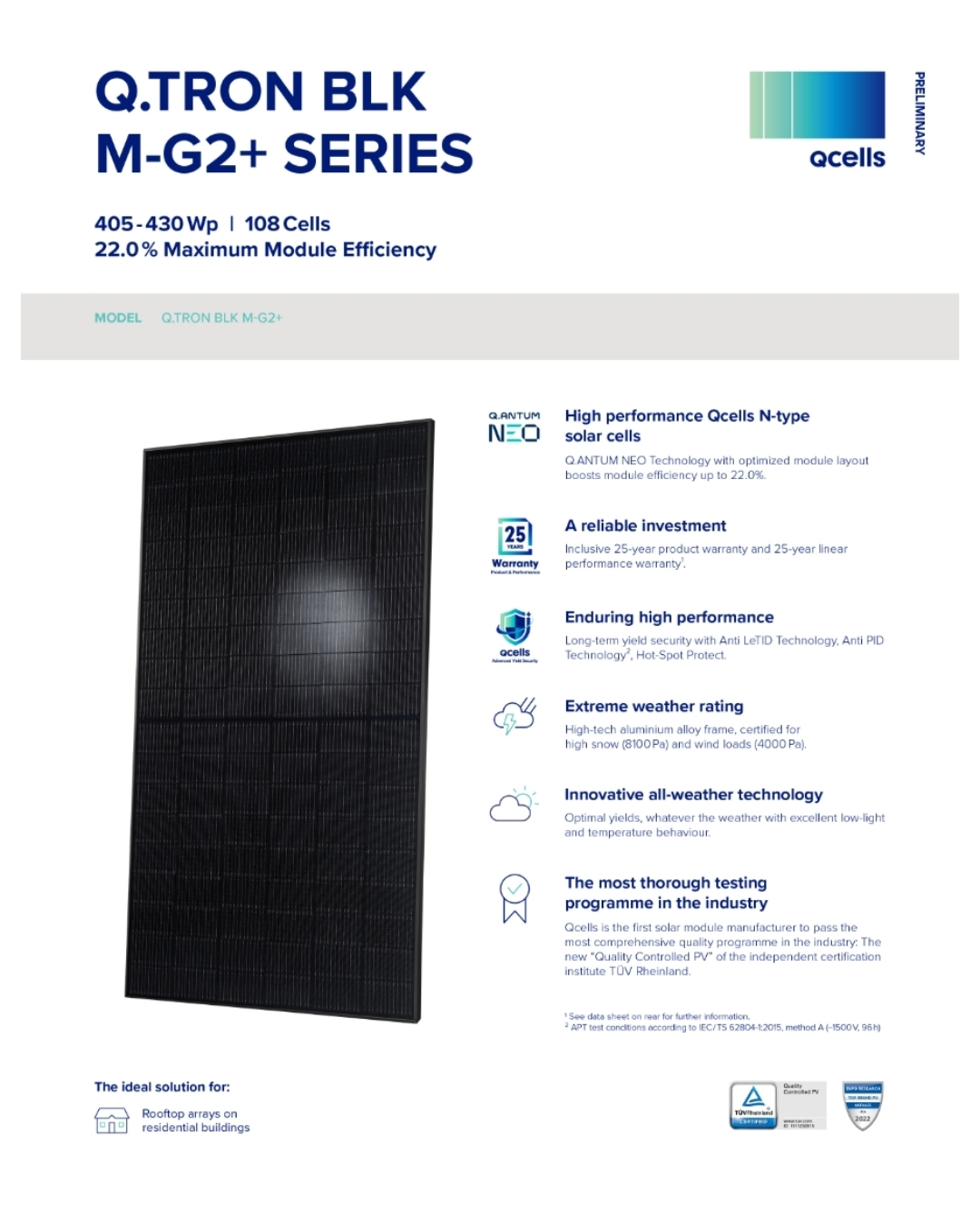
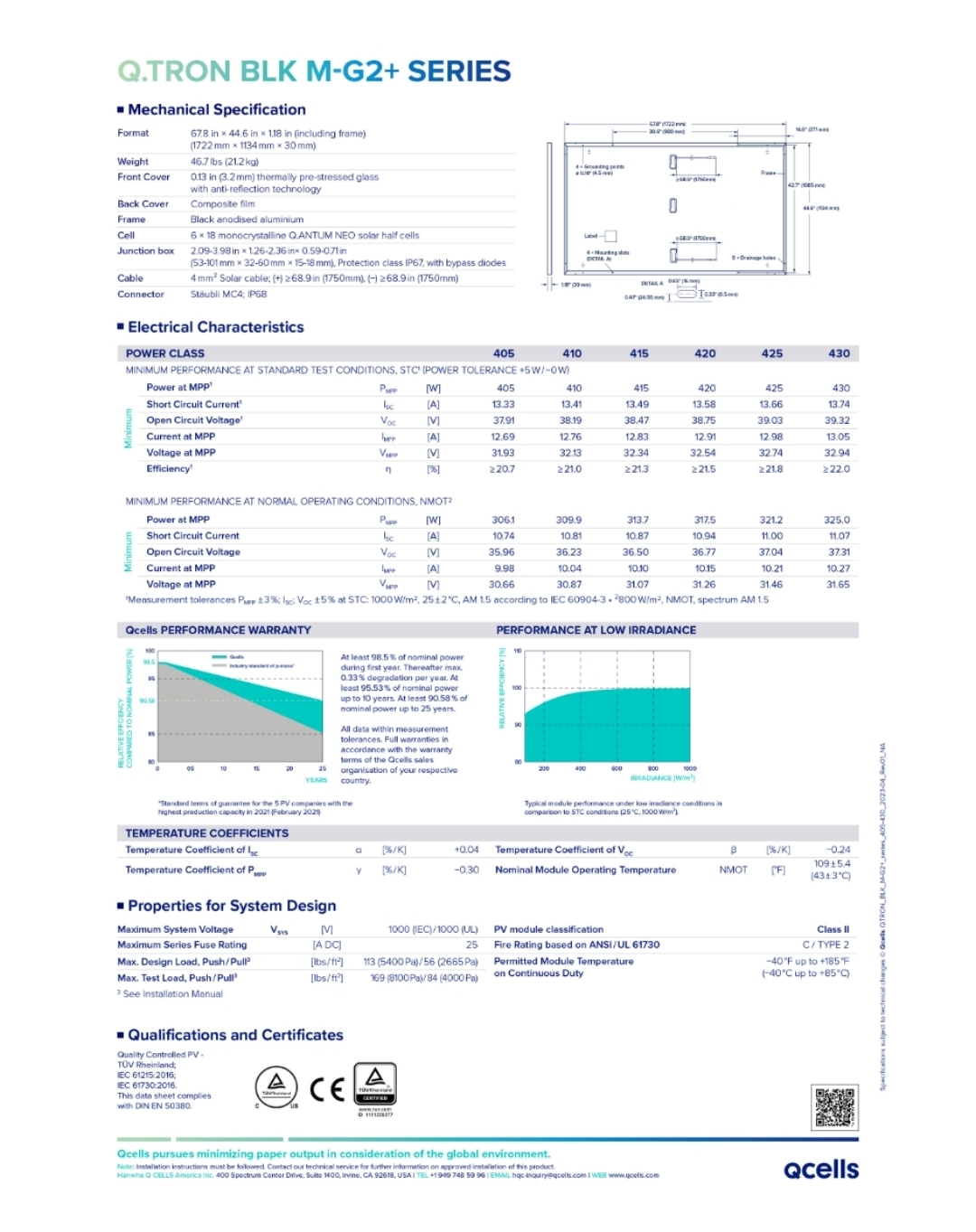

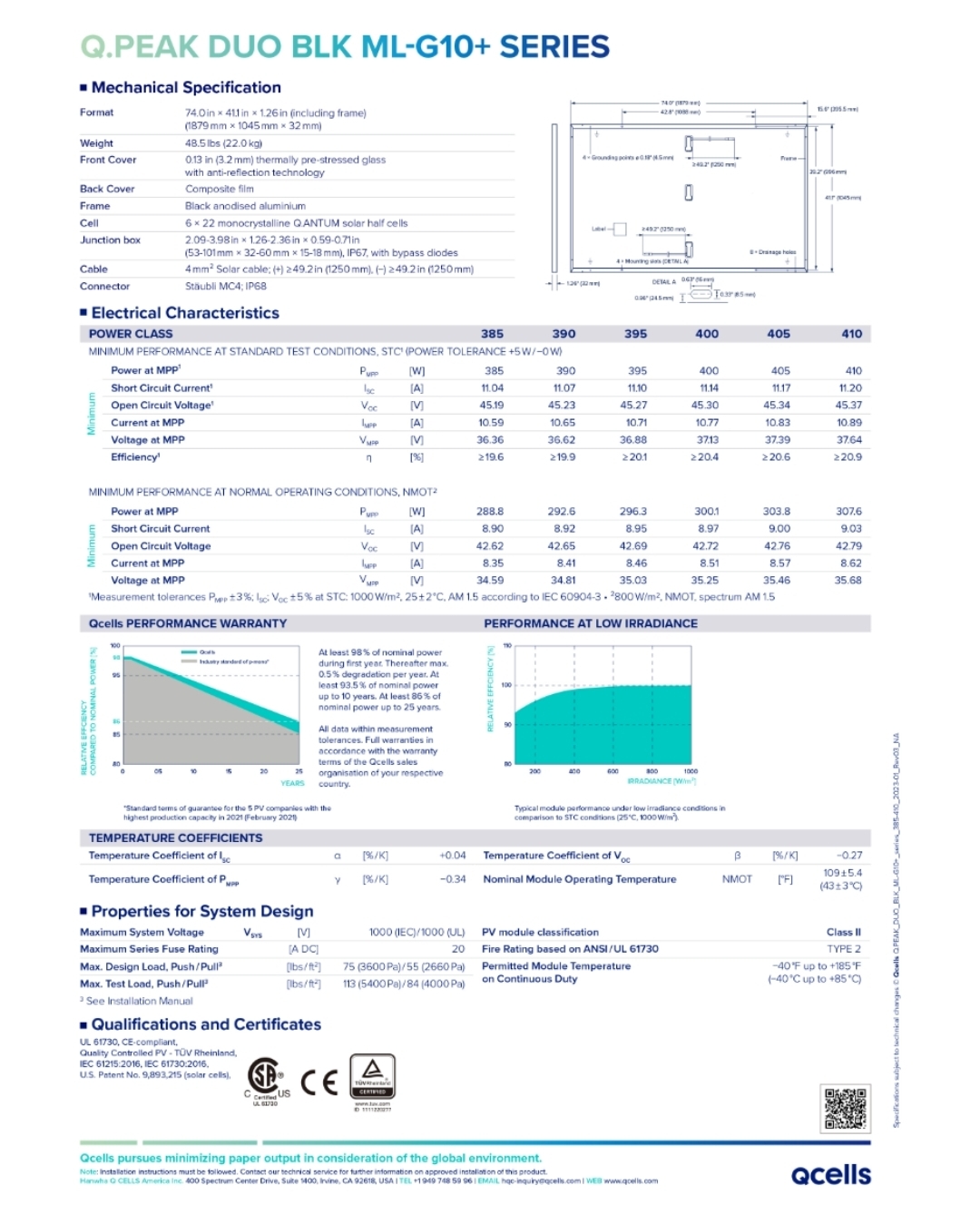
Product names and specifications belong to their respective manufacturers. Equipment availability, warranty coverage, certified-installer conditions, and final performance assumptions must be confirmed in the proposal.

Powur solar planning · 11 served states
Solar panels work with smart inverters and compatible battery storage to help manage everyday energy use and planned backup. A properly engineered system may also coordinate with a standby generator. We review usage, roof condition, critical loads, utility rules and financing before proposing a specific design.
Grid-tied solar alone usually shuts down in an outage. Backup requires compatible islanding equipment, storage or a separate approved backup design. No savings, home-value increase or runtime is guaranteed.
Bill upload is optional. An in-home or virtual Zoom review is free.
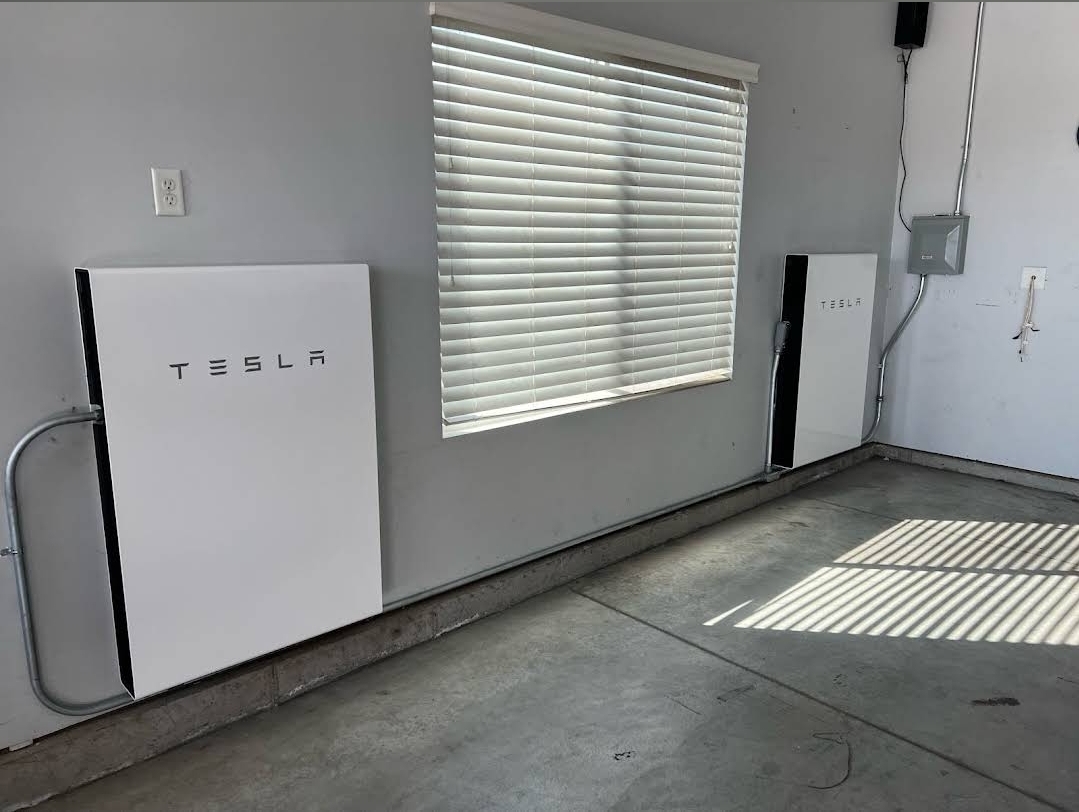
Battery backup in the real world
A battery review can include refrigeration, communications, security, medical equipment, HVAC controls, lighting, panels, solar recharge, generator coordination, and outage-duration goals. The responsible provider confirms compatibility, code, permits, and final installation details.
Explore battery backup →Powur Care 2.0
When a project qualifies, Powur Care 2.0 is presented as one coordinated warranty path for key solar-system components, installation, and certain roof penetrations. We will help you ask the right questions before you decide—not ask you to assume every product has the same coverage.
30 years
Panels, microinverters, racking, and installation
25 years
Shown separately in the supplied overview
15 years
Shown separately in the supplied overview
Coverage periods shown in supplied Powur Care 2.0 overview.
What homeowners can ask about
Please verify the version before you sign. Your proposal must identify the applicable version. Older linked terms differ and exclude storage; do not assume this coverage applies to every battery or project. Signed limited warranty controls covered defects, exclusions and transfers. Not a performance, all-risk, or entire-roof warranty.
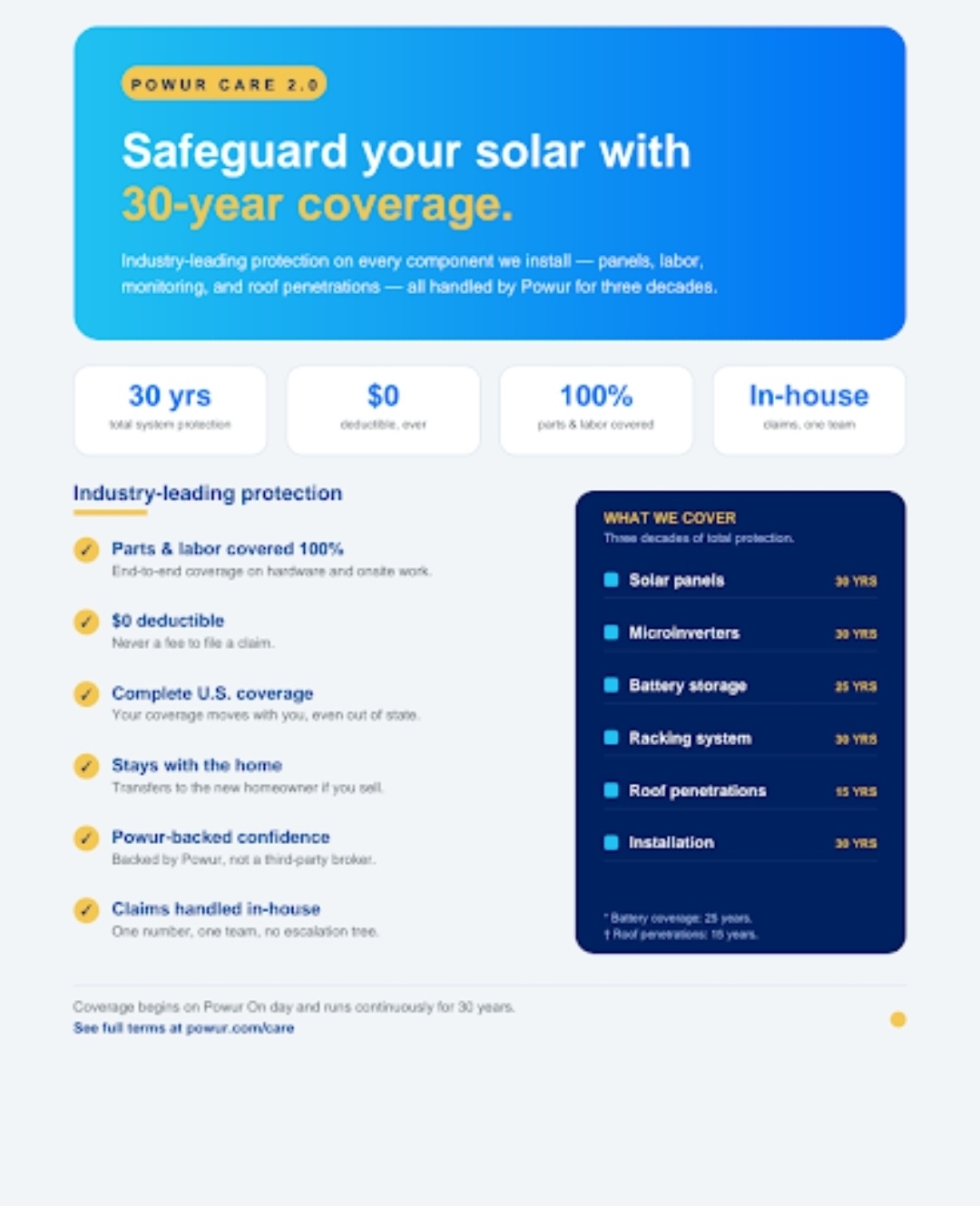
The overview is shown for convenient reference; the signed project documents control.
National energy network · local project review
JB’s Home Solutions is selling solar, battery backup, and residential AI Node hosting opportunities in these states. Start with a free proposal conversation; the property, utility, responsible provider, and applicable program determine eligibility and installation arrangements.
Explore all solar service areas